

Choosing shower glass is not a style decision. It is a structural one. Glass thickness, treatment, edge work, and clarity all affect how the door performs over the next two decades. Houston homeowners who treat glass selection as an aesthetic afterthought usually pay for it later, either in maintenance headaches or premature replacement. This guide walks through exactly what to specify and why.
Quick Answer
Choose shower glass by thickness first, then treatment, then clarity. Three-eighths inch tempered glass works for most semi-frameless and framed enclosures. Half-inch is required for true frameless doors over a certain width. Add a protective coating for hard water areas, choose low-iron glass for true color clarity, and match hardware finish to the bathroom fixtures.
Why Glass Thickness Is the First Decision
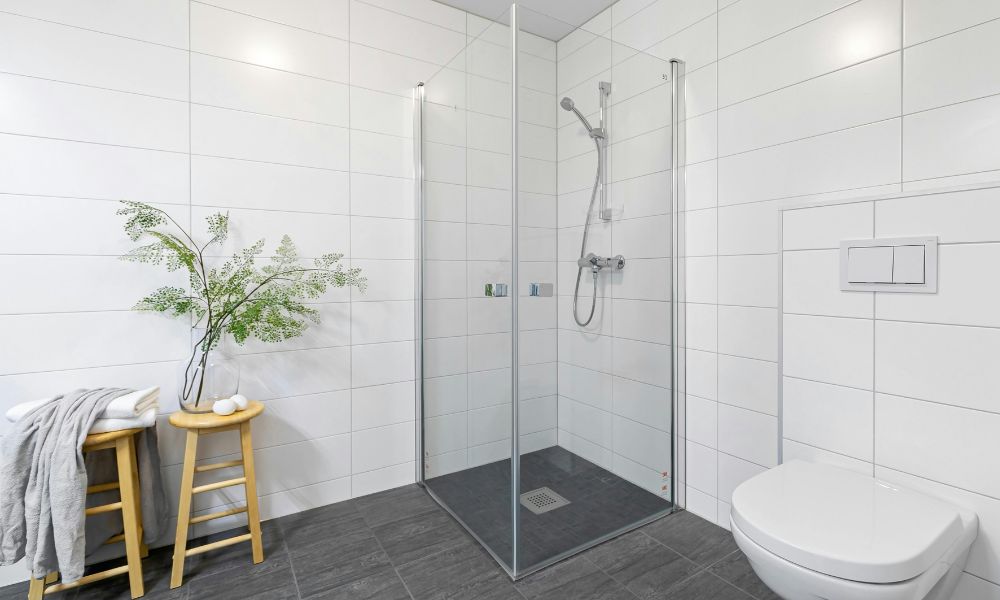
Every other specification depends on thickness. The two standard options for residential shower applications are three-eighths inch (10mm) and half inch (12mm). The difference looks small on paper and feels enormous in person.
- Three-eighths inch glass is the residential standard. It works for framed enclosures, semi-frameless configurations, and frameless doors up to roughly 30 inches wide. Weight is manageable, cost is moderate, and the panel feels substantial in daily use.
- Half-inch glass is the premium option. Required for frameless doors wider than 30 inches, recommended for any door taller than 78 inches, and standard for high-end spa-style enclosures. The added thickness means the glass sits more rigidly, hinges feel more solid, and the entire installation reads as custom rather than catalog.
Going with three-eighths to save money on a wide frameless door is the most common mistake in the category. The glass will sag at the hinge points over time, the door will eventually scrape the threshold, and the hardware will fail prematurely from carrying weight it was never engineered to support.
Tempered Versus Laminated for Showers
Building code requires safety glass in any shower enclosure within 60 inches of the standing surface. That leaves two options: tempered and laminated. For shower applications specifically, tempered is the standard and laminated is rare.
Tempered glass is heat-treated to be roughly four times stronger than annealed glass and breaks into small pebble-sized fragments when it fails. Laminated glass uses a polymer interlayer that holds the glass together when broken, which makes it valuable for impact-rated front doors and skylights, but introduces moisture concerns over the years of shower exposure.
The right answer for showers is heat-soaked tempered glass. The heat-soak process identifies and eliminates panels with nickel sulfide inclusions that cause rare but legitimate spontaneous breakage events. Reputable fabricators offer heat-soaked tempered as standard or as a modest upcharge. It is worth requesting either way.
Clear, Low-Iron, Frosted, or Patterned: Choosing Clarity
Standard clear glass has a green tint when viewed edge-on. This is fine in most installations but becomes visible on large frameless panels under bright lighting. Three main options handle this differently:
- Standard clear: The default. Slight green edge tint, full visibility through the panel. Right for most installations and the most cost-effective option.
- Low-iron (Starphire, Ultraclear): Produced with reduced iron content for true color neutrality. The glass looks colorless even at the edges and showcases tile work without distortion. Costs roughly fifteen to twenty-five percent more than standard.
- Frosted or acid-etched: Provides privacy while still passing light. Great for shared bathrooms and powder room applications. Shows water spots and fingerprints more visibly than clear, so daily wiping is more important.
- Patterned (rain, reed, fluted): Decorative options for design-forward bathrooms. Pattern type affects privacy level and cleaning difficulty.
For Houston bathrooms with white marble or natural stone tile, low-iron glass is almost always worth the upcharge. The slight green tint of standard glass distorts the actual color of the surrounding finishes, and the difference is visible the moment the door closes.
Protective Coatings: What They Actually Do
Houston water hardness varies by neighborhood, but the city average is harder than most of the country. Without intervention, that hardness produces visible mineral spotting on shower glass within months of installation.
Factory-applied coatings such as ShowerGuard, EnduroShield, and Diamon-Fusion bond to the glass at the molecular level and create a hydrophobic surface. Water beads and runs off rather than evaporating in place and leaving minerals behind. The coatings typically last seven to ten years with normal use and add roughly fifteen to twenty percent to panel cost.
The alternative is a daily squeegee habit, which works well for committed homeowners but tends to slip in busy households. A coating plus occasional squeegeeing produces the cleanest long-term result. For Houston water, this combination is the realistic gold standard.
Hardware: The Often-Underestimated Half of the Door
The glass gets all the attention, but hardware determines how the door feels in daily use and how long it lasts. Three categories matter.
- Hinges. Heavy frameless doors require commercial-grade pivot or wall-mount hinges rated for the actual glass weight. Cheap hinges sag within two to three years of Houston bathroom humidity. Quality brass or solid stainless hinges last the life of the enclosure.
- Handles and pulls. Single-sided pulls work for inward-swinging doors, but back-to-back configurations are more common for cleaning ease. Match finish to the bathroom faucets and fixtures.
- Clips, clamps, and brackets. Fixed-panel hardware must be rated for the specific glass thickness. Mixing three-eighths glass with half-inch-rated clips creates a slow-failing installation.
Finish options include polished chrome, brushed nickel, oil-rubbed bronze, matte black, polished brass, and unlacquered brass that develops a patina over time. The cleanest result matches hardware finish to the largest existing fixtures in the bathroom, typically the faucet and showerhead.
Common Mistakes in Shower Glass Selection
The errors that plague shower glass projects are remarkably consistent across thousands of installations.
- Buying the door before measuring the opening. Stock doors fit stock openings. Houston bathrooms are rarely stock. Custom-measured glass is the right approach for any frameless or semi-frameless project.
- Choosing thickness based on price alone. A half-inch door is not a luxury upgrade on a 36-inch wide opening, it is the right specification. Cutting that corner is the mistake.
- Ignoring water containment design. The door must close into a properly designed jamb with sweeps and seals that handle expected water flow. Skipping this creates puddles outside the enclosure.
- Forgetting the threshold height and curb. A door that swings over an inadequate threshold leaks water onto the bathroom floor every time it opens.
- Specifying without checking the layout. Some configurations physically cannot work in some spaces. A professional design review catches this before fabrication begins.
The full shower enclosures and doors service approach starts with on-site measurement and configuration review, not glass selection.
DIY Versus Professional Installation
Glass shower doors are one of the highest-risk DIY categories in residential construction. The panels are heavy, the tolerances are tight, and the consequences of a mistake range from a leaky enclosure to a shattered panel.
DIY can work when installing a pre-built framed enclosure from a major manufacturer with all hardware included, in a stock-sized opening, with two capable installers and a full Saturday available.
Professional installation is required when the door is frameless, the opening is custom-sized, glass thickness is half inch or above, the project includes fixed panels alongside the door, or layout design needs validation. That covers nearly every meaningful shower glass project.
The cost difference between DIY and professional installation is typically three hundred to seven hundred dollars on a project that already involves two to five thousand in glass and hardware. Against the potential for a shattered custom panel that has to be re-ordered with a multi-week lead time, the math is obvious.
Why Choose Northwest Glass & Mirror
Experience. Northwest Glass & Mirror has been designing and installing shower glass across the Houston area since 1978. The team has worked with every layout type, hardware finish, and glass specification the residential market produces.
Reliability. Project-specific quotes, in-house fabrication, and direct installation by the same team produce the consistency that subcontracted national chains cannot match.
Quality and technology. Standard options include heat-soaked tempered glass, low-iron upgrades, factory-applied protective coatings, premium hinge brands, and custom hardware finishes. Every enclosure meets ANSI Z97.1 and CPSC 16 CFR 1201 standards.
Service area and coverage. From River Oaks and Memorial through Katy, Cypress, Spring, and Pearland, Northwest Glass covers the Houston metropolitan area with same-week measurement. See completed shower projects on the project gallery or learn about the company on the about page.
Frequently Asked Questions
What thickness of glass should I choose for my shower door?
Three-eighths inch tempered glass is the standard for most residential applications, including framed and semi-frameless enclosures. Choose half-inch glass for any frameless door wider than thirty inches or taller than seventy-eight inches, and for premium spa-style designs.
How long does a glass shower door installation take?
Once the custom-fabricated glass arrives onsite, installation typically runs four to six hours for a standard configuration. Complex multi-panel enclosures or installations requiring substrate repair can extend to a full day. Total lead time from quote to completion is usually two to four weeks.
What finish should I choose for the hardware?
Match the hardware finish to the largest existing fixture in the bathroom, typically the faucet and showerhead. Polished chrome, brushed nickel, matte black, and brushed brass are the most common residential choices. Avoid mixing more than two finishes in a single bathroom.
Is low-iron glass worth the extra cost?
For bathrooms with light-colored tile, white marble, or natural stone where color accuracy matters, yes. The slight green tint of standard glass distorts surrounding finishes and is visible on large panels. For darker tile or smaller enclosures, standard clear glass works fine and saves fifteen to twenty-five percent.
Can a glass shower door be installed in any bathroom layout?
Most layouts accommodate at least one glass door configuration. Neo-angle, sliding, pivot, and corner configurations each fit different layouts. Extremely small spaces or unusual angles sometimes require custom solutions, which is why a professional design review is essential before ordering glass.
Ready to specify the right glass for your project? Contact Northwest Glass & Mirror for an on-site review, or explore available glass types and start narrowing the options.